
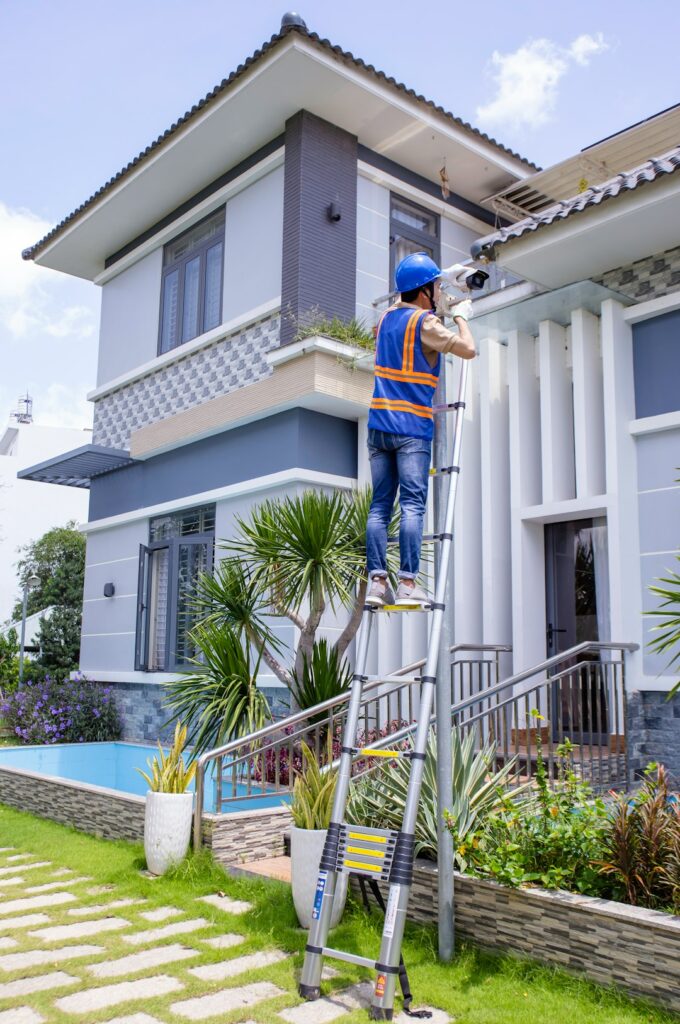
Walking on a roof is more dangerous than it may appear. Roofing materials can be slippery, fragile, uneven, or weakened by age, and a short fall can cause serious injury. For most household tasks, staying on the ground and using a long-handled tool is safer than climbing onto the roof.
If roof access is genuinely necessary, the safest approach is to assess the conditions first, use proper access equipment, move slowly, and recognize when the roof should not be walked on at all.
Is it safe for a homeowner to walk on a roof?
A homeowner may be able to walk on a low-slope, dry, structurally sound roof for a brief inspection, but no roof should be treated as a normal walking surface. Steep roofs, wet roofs, icy roofs, and roofs with unknown damage present substantial fall risks.
A roof may also conceal hazards that are not visible from the ground, including:
- Loose or cracked shingles
- Soft decking caused by water damage
- Hidden skylights or roof openings
- Unstable gutters, vents, or flashing
- Moss, algae, frost, or thin ice
- Snow-covered edges and valleys
- Overhead utility lines near the access point
Roofing workers use fall-protection systems because balance and footing alone are not reliable safeguards. Walking carefully does not replace guardrails, properly installed anchors, restraint systems, or other protective equipment when work is performed at elevation.
When should you stay off the roof?
Do not walk on a roof that is wet, frosted, snow-covered, icy, or visibly damaged. In Hamlin, changing temperatures, lake-effect weather, spring moisture, and freeze-thaw cycles can create slippery surfaces even when the roof looks mostly dry.
Avoid roof access during or shortly after:
- Rain or freezing rain
- Snowfall or blowing snow
- Strong winds or sudden gusts
- Morning frost or heavy dew
- Rapid warming after a freeze
- Any storm that may have loosened roofing materials
A roof can also become slick in bright sunlight when melting snow refreezes in shaded areas. Do not assume that a few dry shingles mean the entire walking path is safe.
Stay off roofs that have sagging areas, missing sections, exposed underlayment, large patches of moss, or signs of structural movement. If a foot sinks, the surface flexes, or the roof makes unusual cracking sounds, stop immediately and return by the same route if doing so is safe.
How should the ladder be positioned?
Safe roof travel begins before stepping onto the roof. A ladder should stand on firm, level ground, away from soft soil, ice, snow piles, or unstable surfaces. It must be tall enough to provide a secure transition without forcing a person to stretch or climb onto the roof edge awkwardly.
Before climbing:
- Inspect the ladder for bent rails, damaged rungs, and missing feet.
- Clear the area around the base.
- Keep the ladder away from overhead electrical lines.
- Face the ladder while climbing.
- Maintain three points of contact whenever possible.
- Do not carry tools in both hands.
- Secure the ladder so it cannot slide, shift, or rotate.
- Keep the top of the ladder from resting on a weak gutter or loose trim.
A ladder should not be placed against gutters, decorative roof edges, or other components that are not designed to support climbing loads. For roof work, a properly secured extension ladder and a stable transition point are essential.
What is the safest way to walk on shingles?
If the roof is dry and access is unavoidable, walk slowly with your body facing across the slope rather than turning sharply. Keep your center of gravity low, take short steps, and avoid sudden movements.
Place each foot deliberately on the stronger portions of the roofing surface. With many asphalt-shingle roofs, that generally means stepping where the shingle is supported by the roof structure rather than directly on exposed edges, loose tabs, ridges, or valleys. Do not step on ridge caps, flashing, vents, skylights, or gutters.
Use footwear with clean, slip-resistant soles. Mud, gravel, tree debris, and roofing granules can reduce traction. Remove packed snow or mud from footwear before climbing, but do not attempt to scrape ice from a roof while standing on it.
Never jump across a valley, step backward without looking, or carry bulky objects that block your view. Keep tools in a secured belt or hoist them after reaching a stable location.
Are some roofing materials unsafe to walk on?
Yes. Roofing materials differ in strength and traction, and some should not be walked on without specialized training and equipment.
Extra caution is needed with:

- Clay, slate, and other brittle roofing materials
- Older shingles that crack under pressure
- Metal roofing, especially when wet or frosted
- Low-slope membranes that may hide soft decking
- Corrugated panels with uncertain support
- Roofs covered by solar equipment or fragile attachments
Do not step on transparent or translucent panels, even if they look solid. Skylights and similar openings may not support a person’s weight and can be difficult to distinguish beneath dust, snow, or glare.
How can someone inspect a roof without climbing onto it?
Many routine observations can be made safely from the ground. Use binoculars to look for missing shingles, lifted edges, damaged flashing, sagging gutters, dark moisture stains, and debris near roof valleys.
Other safer inspection methods include:
- Viewing roof slopes from upper windows
- Checking the attic for daylight, damp insulation, or water stains
- Looking at ceilings after heavy rain
- Using a camera mounted on an extension pole
- Observing roof drainage from the ground
- Checking downspouts and ground-level areas for shingle granules
A ground inspection cannot identify every problem, but it often provides enough information to decide whether roof access is necessary.
What should be done if a roof is covered by snow or ice?
Do not walk onto a snow- or ice-covered roof to clear it manually. Snow can conceal weak areas, roof edges, vents, and skylights. Its weight may also add stress to the roof structure, particularly when wet snow accumulates or drifts unevenly.
Snow removal from a roof can create additional hazards below. Falling snow and ice may injure people, damage property, block exits, or affect overhead lines. Keep people away from the area beneath an active roof edge and avoid standing under snow-loaded eaves.
If snow or ice appears to be causing structural stress, such as interior cracking, sagging ceilings, or sharply bowed roof lines, leave the affected area and seek qualified assistance rather than climbing up to investigate.
When is professional fall protection necessary?
Fall protection is necessary when the roof is steep, high, fragile, difficult to access, or close to an unprotected edge. It is also necessary when the task requires both hands, repeated movement, tools, material handling, or extended time on the roof.
A fall-arrest harness is not automatically safe simply because it is worn. The anchor must be appropriate for the roof structure, connected correctly, and used with equipment that allows safe movement and rescue. Improvised anchors, chimney parts, plumbing vents, gutters, and roof jacks should not be treated as reliable fall-protection points.
If safe access cannot be established from the ground, the safest decision is not to climb. A roof inspection or repair that requires specialized access equipment should be performed under a properly planned fall-protection system rather than with ordinary footwear and a ladder alone.
What is the safest general rule?
Treat every roof as a work area, not a walkway. Inspect from the ground whenever possible, avoid poor weather and winter conditions, use a properly secured ladder, keep both hands available for balance, and stop immediately when the surface, structure, or weather becomes uncertain.
For residents in Hamlin, seasonal moisture, freezing temperatures, wind, and snow can change roof conditions quickly. Waiting for a dry, calm day—or avoiding roof access altogether—often prevents the most serious hazards.
