
Roof problems often begin with something that looks minor: a loose shingle, a small ceiling stain, or a patch of missing sealant. In Hamlin, NY, repeated freeze-thaw cycles, lake-effect snow, wind, ice, and heavy rain can expose weak repairs quickly. The most common mistakes are not always dramatic. Many involve using the wrong materials, overlooking hidden damage, or repairing symptoms without finding the source of the leak.
Mistake 1: Patching the Visible Leak Instead of Finding Its Source
A ceiling stain does not always appear directly below the roof opening. Water can travel along rafters, roof decking, insulation, or framing before entering the living space. That means applying sealant around the interior stain may stop the symptom temporarily without correcting the roof defect.
Look for the likely entry point above the stain, but do not assume it will be obvious. Common sources include:
- Damaged or missing shingles
- Failed flashing around chimneys, vents, and wall intersections
- Open seams in roof valleys
- Cracked vent boots
- Ice-related damage near the eaves
- Gaps around skylights or roof penetrations
A leak that appears only during wind-driven rain may enter from a different direction than one caused by melting snow. Tracking when the leak occurs can provide useful clues.
Mistake 2: Using Interior Caulk as a Permanent Roof Repair
Interior caulk, paint, and patching compound can hide water marks, but they do not repair the roof. Covering a stain before the area is dry can also trap moisture and make it harder to detect ongoing damage.
After the roof problem is corrected, the affected ceiling or wall should be allowed to dry thoroughly. Persistent discoloration, soft drywall, peeling paint, musty odors, or damaged insulation may indicate that moisture has remained in the assembly. Covering these signs too soon can conceal mold growth or deterioration of the framing.
Mistake 3: Installing a Mismatched Shingle or Fastener
A replacement shingle should be compatible with the existing roof system. Differences in size, profile, exposure, thickness, or fastening location can leave the repair vulnerable to wind and water.
Fasteners matter as well. Nails that are too short may not hold securely through the shingle and roof deck. Nails placed too high, too low, or outside the manufacturer’s intended fastening area can create a weak point. Exposed fastener heads may rust or allow water to enter, especially when they are not properly covered by overlapping roofing material.
A small repair should still match the roof’s design and installation requirements rather than simply filling the empty space.
Mistake 4: Applying Roofing Cement Everywhere
Roofing cement can be useful in limited situations, but spreading it over a damaged area is not a substitute for proper repair. Thick patches can crack, shrink, or separate as temperatures change. In cold climates, repeated freezing and thawing can make this problem worse.
Heavy use of cement may also hide the actual condition of the shingles or flashing. If the underlying material is split, loose, or deteriorated, covering it may delay a more durable correction while allowing water to continue entering.
A repair material should be selected for the specific defect, not used as a general-purpose coating.
Mistake 5: Ignoring Flashing and Roof Transitions
Roof planes are often less difficult to repair than the areas where different surfaces meet. Flashing is installed at vulnerable transitions, including chimneys, dormers, walls, valleys, skylights, and plumbing vents. These locations deserve careful inspection because they handle concentrated water flow.
A common mistake is replacing shingles around a leak while leaving damaged or improperly installed flashing in place. Another is sealing the top edge of flashing while failing to address gaps underneath or water flowing behind it.
In older homes, flashing may be made from materials that have corroded, separated, or been covered by several layers of patching. A repair that does not account for the entire transition may fail during the next major storm.
Mistake 6: Repairing a Wet Roof or Working in Unsafe Conditions
Wet shingles, frost, snow, and steep slopes create fall hazards. Wind can also make panels, tools, and loose roofing materials difficult to control. Roof work should not be attempted during rain, icy conditions, strong gusts, or poor visibility.
Snow is especially significant in the local climate. Removing snow from a roof with inappropriate tools can damage shingles, flashing, gutters, and protective surface layers. Walking on frozen or brittle shingles can also cause cracking that may not be visible immediately.
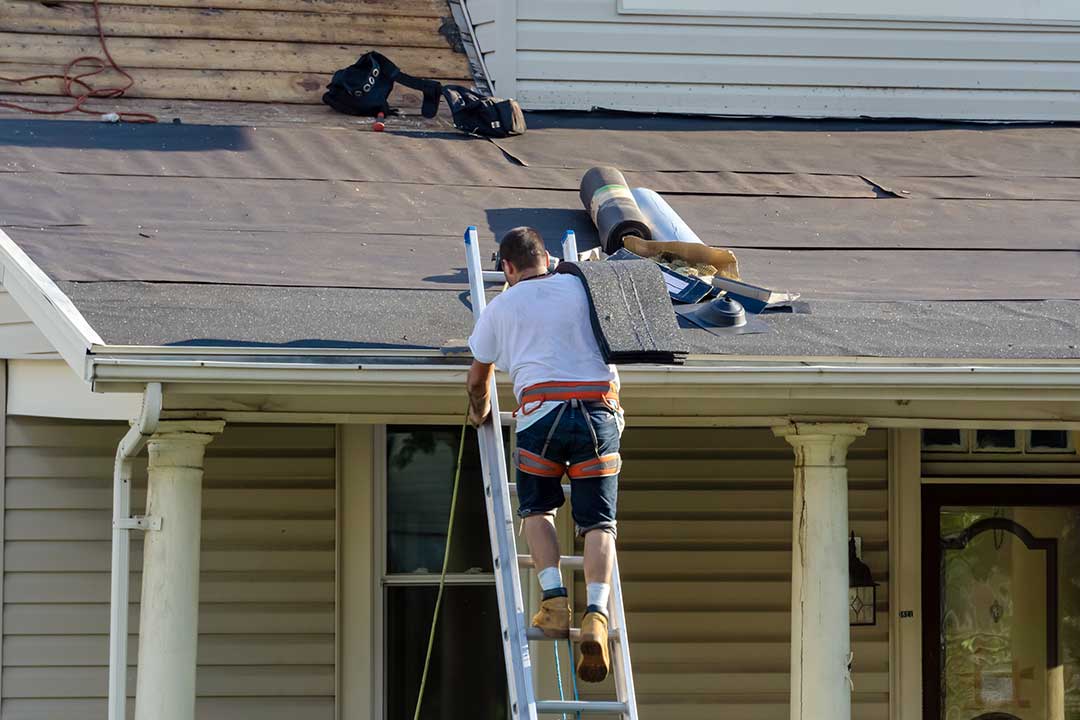
Ladders need stable footing, proper angle, and secure placement. Power lines, unstable roof edges, and hidden ice should be treated as serious hazards. If a repair requires unsafe access, the risk is greater than the value of a quick patch.
Mistake 7: Neglecting Ventilation and Attic Moisture
Not every roof-related stain is caused by rain. Warm, moist indoor air can move into a cold attic and condense on roof decking, nails, insulation, or framing. This is more likely when bathroom fans discharge into the attic, insulation blocks intended airflow, or the attic lacks balanced ventilation.
Condensation can resemble a roof leak because it may produce damp wood, dark staining, or dripping water. Replacing shingles without correcting the moisture source will not solve the problem.
Check whether exhaust fans vent outdoors, whether attic insulation is wet or compressed, and whether soffit and ridge ventilation paths are clear. Attic moisture can also contribute to ice buildup along the eaves, which may push water beneath shingles during thawing.
Mistake 8: Replacing Shingles Without Checking the Roof Deck
Shingles are only the outer layer of a roof system. If the decking beneath them is soft, swollen, delaminated, or visibly deteriorated, installing new shingles over it may leave an unstable surface.
Roof decking can be damaged by long-term leaks, blocked gutters, ice dams, poor ventilation, or repeated wetting around penetrations. Soft spots should not be ignored, particularly near valleys, eaves, chimneys, and plumbing vents.
A sound repair requires checking whether the supporting materials can hold fasteners and carry the roof covering. Covering deteriorated decking may make the roof look improved while preserving the structural problem underneath.
Mistake 9: Forgetting Gutters, Downspouts, and Drainage
A roof repair can fail if water is still being directed against the house. Clogged gutters, disconnected downspouts, and poor discharge locations can saturate fascia boards, siding, foundation areas, and roof edges.
Gutters should be checked after leaf season, major storms, and periods of heavy snow or ice. Downspouts should move water away from the foundation rather than releasing it beside the wall. Ice buildup at the eaves may indicate a combination of heat loss, ventilation problems, and drainage conditions rather than a shingle defect alone.
Keeping drainage paths clear does not repair a damaged roof, but it can prevent additional water from reaching vulnerable areas.
Mistake 10: Waiting After Temporary Damage
Temporary measures can reduce immediate water entry, but they should not be mistaken for completed repairs. A tarp that shifts in wind, a loose shingle held by one fastener, or a bucket beneath a ceiling drip only addresses the immediate symptom.
After severe wind, fallen branches, heavy snow, or ice damage, inspect the roof from the ground for changes in the roofline, missing materials, exposed underlayment, or debris. Interior signs such as new stains, damp insulation, or dripping around light fixtures require prompt attention. Water near electrical components is particularly hazardous.
The safest approach is to document the damage, limit interior exposure where possible, and avoid walking on a compromised roof. Repairs should account for both the visible defect and the conditions that allowed it to develop.
What Makes a Roof Repair More Reliable?
A dependable repair usually involves four steps: identify the source, remove or correct damaged material, use compatible replacement materials, and check nearby areas for related problems. The repair should also account for local weather patterns, especially wind exposure, snow loading, freezing temperatures, and spring thaw.
For residents maintaining older housing, records of past leaks and repairs can be useful. Repeated problems in the same location may indicate a design, drainage, flashing, or ventilation issue rather than bad luck. A roof that appears sound from the ground can still have concealed damage, so unusual odors, recurring stains, soft attic decking, and unexplained moisture deserve attention.
Safety and structural concerns take priority over a quick cosmetic fix. A roof repair is more likely to last when it restores the water-shedding system instead of simply covering the evidence of failure.
