
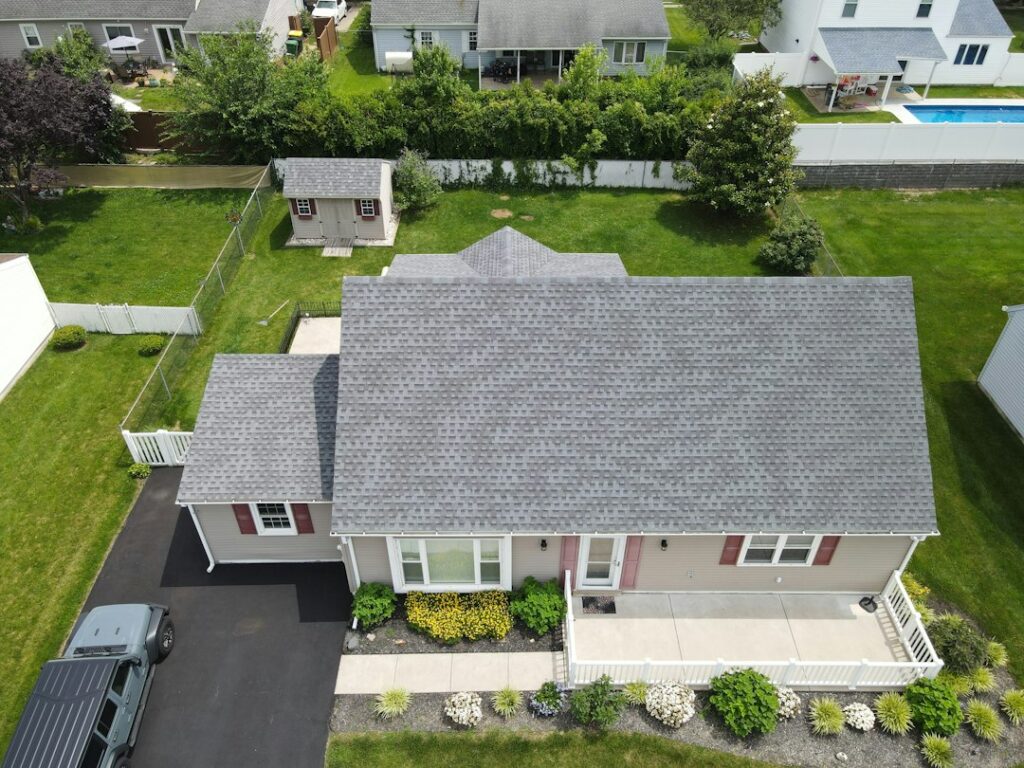
Does a new roof increase home value?
A new roof can improve a home’s marketability, protect its condition, and reduce concerns for future buyers. It does not always add its full installation cost to the sale price, but it can help a property compete more effectively with similar homes.
Roof replacement tends to have the greatest effect when the existing roof is visibly worn, near the end of its expected service life, leaking, or likely to raise questions during a home inspection. In those situations, the value comes not only from the new materials but also from avoiding a major defect.
For homeowners in Hamlin, roof condition can be especially relevant because roofs must withstand snow, wind, freeze-thaw cycles, rain, and periods of heavy moisture. A roof that appears dependable through these conditions may give buyers greater confidence in the home as a whole.
How does a roof affect a buyer’s perception of a home?
A roof is one of the first exterior features buyers notice, even if they do not consciously study it. Curling shingles, dark stains, missing sections, sagging areas, or poorly repaired flashing can make the entire property appear less well maintained.
A newer roof can create a different impression:
- The home appears cared for and maintained.
- Buyers may feel less pressure to budget for an immediate major repair.
- The exterior may look more consistent with updated siding, trim, windows, or landscaping.
- The property may be easier to compare with other homes that have newer roofing systems.
This is partly psychological, but it is also practical. A roof protects the attic, insulation, ceilings, walls, and interior finishes. Visible roof deterioration can cause buyers to wonder whether hidden moisture damage exists below the surface.
Does a new roof recover its full cost?
Usually, homeowners should not assume that a roof replacement will return every dollar spent when the property is sold. Remodeling costs and resale value are not always equal.
The financial effect depends on several factors:
- The age and condition of the old roof
- The quality and appearance of the replacement
- Local buyer expectations
- The home’s overall condition
- Whether the roof replacement prevents inspection problems
- The timing of the sale
- Whether the project addresses underlying ventilation, flashing, or water-management issues
A roof that was already in fair condition may provide a modest resale advantage. A roof that was failing may provide more value by preventing a price reduction, repair credit, delayed closing, or buyer withdrawal.
In other words, the replacement may protect the home’s existing value rather than create a dramatic increase above comparable properties.
Why does roof age matter during a home sale?
Roof age is commonly considered during listing preparation, buyer review, insurance discussions, and home inspections. Buyers often want to know when the roof was installed, what materials were used, whether repairs were completed, and whether any transferable documentation is available.
An older roof does not automatically mean a home is a poor investment. A roof that has been maintained and has no signs of active failure may still perform adequately. However, uncertainty can affect negotiations.
If the roof is near the end of its expected service life, a buyer may calculate the likely replacement cost and adjust an offer accordingly. Some buyers may also ask for repairs or a credit before closing. A newer roof can reduce that uncertainty.
Keeping records of the replacement date, materials, permits when applicable, invoices, warranties, and maintenance work can help establish the roof’s history.
Can a new roof improve a home inspection?
A new roof can make an inspection more straightforward, but it does not guarantee a completely problem-free report. Inspectors may still identify concerns involving attic ventilation, chimney flashing, gutters, drainage, structural framing, or signs of prior moisture.
A roof replacement is more likely to support value when it includes attention to the entire roofing system rather than only the visible shingles. Important components may include:
- Underlayment beneath the roof covering
- Flashing around chimneys, walls, and roof penetrations
- Valleys where water collects
- Drip edges and eave protection
- Ridge and soffit ventilation
- Ice-dam protection where appropriate
- Proper water discharge from gutters and downspouts

In a snowy climate, small weaknesses can become more noticeable after repeated cycles of freezing, thawing, wind-driven rain, and snow accumulation. A replacement that leaves underlying drainage or ventilation problems unresolved may not deliver the expected long-term benefit.
Does roofing material influence value?
Roofing material can affect appearance, durability, maintenance expectations, and buyer perception. The most valuable choice is not necessarily the most expensive material. It is usually the option that fits the home, the surrounding properties, the roof design, and the area’s weather conditions.
A replacement should look appropriate for the structure. Color, texture, roof pitch, trim, and architectural style all influence how the finished roof fits with the home.
Consistency also matters. A high-quality roof may receive less positive attention if the gutters are failing, the siding is severely deteriorated, or the exterior has obvious deferred maintenance. Buyers evaluate the property as a whole, not just the roof covering.
Can a new roof lower home insurance concerns?
A roof in poor condition may create questions during insurance underwriting or renewal, depending on the insurer’s rules and the roof’s age. A newer roof may reduce some concerns, but insurance outcomes vary by policy, material, installation quality, and documented condition.
Homeowners should avoid assuming that a replacement automatically lowers premiums. The more dependable benefit is often reduced exposure to leaks and related interior damage. Preventing water intrusion can help protect ceilings, insulation, drywall, flooring, electrical components, and personal belongings.
Insurance records and tax records are separate matters. A whole-roof replacement is generally considered a home improvement for recordkeeping and may affect the property’s tax basis, but it is not automatically a current-year deduction. Tax treatment depends on the circumstances of the property and the sale.
Is repair better than replacement for home value?
Repair is often the better choice when the roof is generally sound and the problem is limited. Replacing a few damaged shingles, correcting flashing, or repairing a small leak may preserve value without the cost of a full replacement.
Replacement becomes more reasonable when damage is widespread, the roof is near the end of its service life, repeated repairs are needed, or moisture has affected roof decking and interior areas.
A new roof installed solely for resale may not be financially sensible if the existing roof has many useful years remaining. On the other hand, delaying replacement when failure is becoming likely can lead to interior damage and a more complicated sale.
The practical question is not simply, “Will a new roof raise the selling price?” It is, “What condition will the home present to buyers, inspectors, lenders, and insurers if the roof remains as it is?”
What should homeowners consider before replacing a roof?
Before making a decision, document the roof’s current condition with dated photographs and repair records. Review the attic for staining, damp insulation, poor airflow, or daylight where it should not be visible. Also consider gutters, downspouts, chimney areas, roof penetrations, and attic ventilation.
For a future sale, useful records may include:
- Installation date
- Roofing material and color
- Scope of work
- Receipts and payment records
- Warranty information
- Permit documentation when required
- Photos taken before and after the work
- Notes about repairs or leak history
A roof replacement can support home value by improving protection, appearance, buyer confidence, and inspection results. Its strongest financial effect usually comes when it removes a clear liability from the property rather than when it is treated as a guaranteed profit-producing upgrade.
