
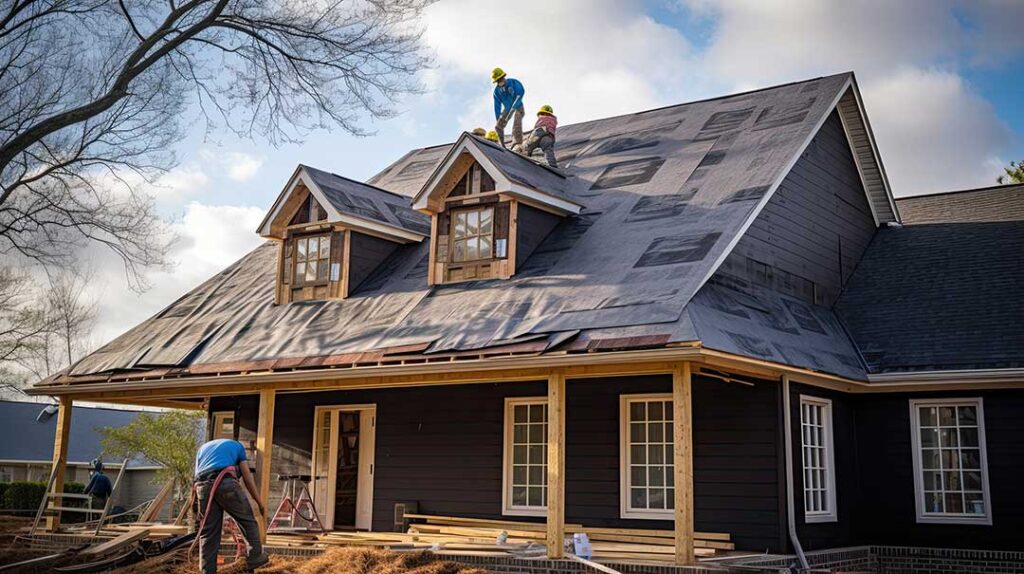
Renovation work can protect and improve a home, but it can also expose the roof to damage that is easy to overlook. In Hamlin, NY, changing weather, wind, rain, ice, and heavy snow make temporary roof protection especially important whenever exterior walls, roof coverings, windows, skylights, or attic areas are opened.
A roof does not need to be completely removed to be put at risk. Foot traffic, dropped tools, unsecured materials, dust, fasteners, and improperly placed ladders can damage shingles, flashing, gutters, and roof drainage.
Which renovation projects can affect the roof?
Projects involving the upper part of a home create the greatest risk, but almost any major renovation can affect roofing materials.
Common examples include:
- Roof replacement or repairs
- Dormer, skylight, or chimney work
- Attic insulation or ventilation upgrades
- Solar or rooftop equipment installation
- Siding, window, and exterior wall replacement
- Second-story additions
- Porch, deck, or addition construction
- Interior remodeling beneath the roof
- Electrical, plumbing, or HVAC work that requires roof penetrations
Even a kitchen or bathroom renovation may affect the roof if workers need to run new vent pipes through the roof. A new bathroom exhaust fan, for example, should not simply terminate inside an attic. Improperly sealed penetrations can allow moisture to enter the roof assembly and insulation.
Before work begins, identify every location where the renovation may touch, cross, penetrate, or place weight on the roof.
How should the roof be inspected before work starts?
A condition check before renovation creates a useful record and helps distinguish old damage from new damage. The inspection should cover both the visible roof and the attic side of the roof deck when accessible.
Look for:
- Missing, lifted, cracked, or brittle shingles
- Loose or rusted flashing
- Sagging roof areas
- Water stains on ceilings or attic framing
- Damp insulation or musty odors
- Blocked gutters and downspouts
- Soft roof decking
- Exposed nail heads
- Damaged ridge vents, soffit vents, or other ventilation openings
Photographs taken before materials arrive can be helpful. Include roof edges, valleys, penetrations, gutters, nearby siding, and ceilings below areas that will be disturbed.
Existing defects should be addressed before renovation materials cover them. A new wall, addition, or layer of insulation can make a leak harder to locate later.
What is the safest way to protect an exposed roof?
The roof should never be left open to changing weather without a planned temporary covering. A properly secured roofing underlayment, temporary membrane, or heavy-duty weather barrier should cover exposed decking and be arranged so water drains away from the building.
Temporary protection should:
- Extend beyond the exposed area far enough to prevent wind-driven rain from reaching the deck
- Be fastened securely rather than held down only with loose boards or objects
- Shed water toward a safe drainage path
- Avoid trapping water against siding, masonry, or finished surfaces
- Remain intact during overnight periods and work stoppages
- Be checked after strong wind, rain, or snow
Plastic sheeting may help in an emergency, but loosely draped plastic is not a dependable long-term roof covering. Wind can tear it, lift it, or drive water underneath. Improvised coverings can also collect water and place excessive weight on roof framing.
If the roof deck is exposed during a renovation, the work plan should account for the possibility that weather may delay installation of the permanent roof covering.
How can foot traffic and equipment damage roofing?
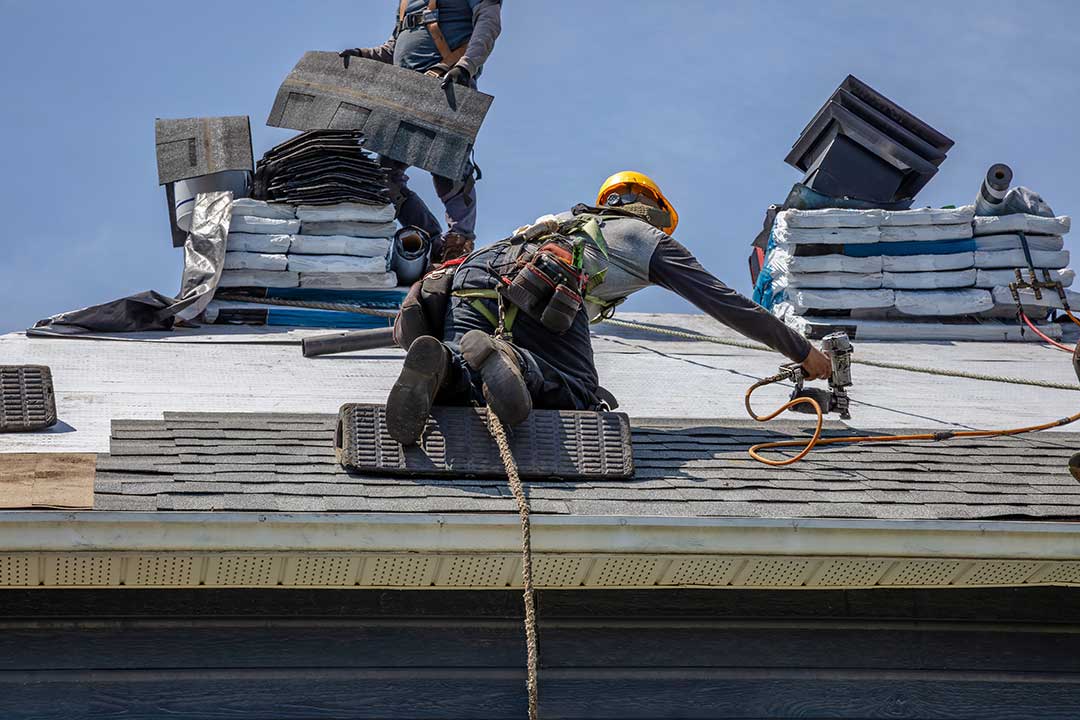
Roofing materials are not designed to serve as a general work platform. Repeated walking can loosen granules, break aging shingles, bend metal flashing, and damage ridge or valley details. Roof edges are also vulnerable to ladders, scaffolding, and lifted materials.
Use these precautions:
- Keep foot traffic limited to necessary areas.
- Use designated walk boards or platforms where appropriate.
- Do not drag lumber, conduit, tools, or roofing bundles across the surface.
- Protect gutters from ladders and scaffolding loads.
- Keep sharp metal edges away from shingles and membranes.
- Do not stack heavy materials on one small roof section.
- Remove loose fasteners, cutoffs, and debris at the end of each work period.
Roof loading deserves extra attention during the colder months. Wet lumber, masonry, roofing bundles, equipment, and accumulated snow can combine to create a significant load. Materials should not be stored on a roof without confirming that the framing can safely support them.
How should roof penetrations be handled?
Any new hole through the roof needs more than caulk. Pipes, vents, skylights, electrical conduits, and equipment supports must be integrated with the roof covering and flashing so water is directed around the opening.
A sound installation generally includes:
- The correct roof flashing for the type of penetration
- Proper placement beneath or above surrounding materials
- Secure attachment that does not create unnecessary openings
- Compatible sealants used only where appropriate
- Protection against movement caused by wind, temperature changes, or settling
- A clear drainage path around the penetration
Sealant can deteriorate, separate, or crack. It should not be treated as the only defense against water. Flashing details and material overlap do most of the work.
After a penetration is installed, inspect the attic side during or after the next significant rain. Water may travel along framing before appearing directly below the opening.
What should homeowners do during winter renovations?
Cold-weather work requires planning because roof materials, temporary coverings, and sealants may behave differently at low temperatures. Snow and ice also create fall hazards and can hide damage.
For winter projects:
- Clear snow from work areas without scraping or gouging the roof surface.
- Do not walk on icy or snow-covered roofing unless proper safety procedures are in place.
- Keep temporary coverings tight and secured against wind.
- Watch for ice buildup at eaves and around drainage points.
- Prevent indoor heat and moisture from entering a cold attic through open ceiling areas.
- Keep exposed insulation and roof decking dry.
- Monitor ceilings and attic spaces after thawing weather.
Heavy snow can conceal sagging, damaged flashing, or open seams. If unusual roof deflection, cracking sounds, ceiling movement, or structural distress appears, stop work and keep people away from the affected area until the condition can be evaluated safely.
How do renovation activities affect gutters and drainage?
Gutters and downspouts protect walls, foundations, landscaping, and lower roof edges. During construction, they can be dented by ladders, buried under debris, or disconnected while siding and trim are removed.
Maintain drainage by:
- Covering or temporarily removing vulnerable gutter sections when necessary
- Keeping roofing granules, sawdust, mortar, and fasteners out of gutters
- Checking that downspouts remain connected
- Directing temporary roof runoff away from doors, foundations, and walkways
- Cleaning the system after roof or exterior work is complete
A blocked gutter may not create an immediate indoor leak, but repeated overflow can damage fascia, soffits, siding, and masonry.
Are permits or code requirements involved?
Some renovation work requires permits and must comply with the applicable New York State building and residential codes. Roof assemblies are expected to provide weather protection, and flashing is required at roof intersections, changes in direction or slope, and penetrations.
Permit questions depend on the scope of work, structural changes, electrical or mechanical systems, and local administration. Confirm requirements before removing structural components, changing roof geometry, adding living space, or installing new rooftop equipment.
Safety is also a legal and practical concern. Roof work, scaffolding, ladders, temporary openings, and structural alterations can create hazards that are not suitable for untrained occupants or casual helpers.
What should be checked when the renovation is finished?
A final roof review should occur before coverings, insulation, trim, or interior finishes hide important details. Check that:
- All roof openings are flashed and sealed correctly.
- Temporary coverings and unused fasteners are removed.
- Shingles, membranes, metal panels, and flashing are undamaged.
- Gutters and downspouts are clear and properly connected.
- Attic insulation is dry and ventilation paths remain open.
- Ceilings and wall areas below the work show no new staining.
- Construction debris has not entered roof drains or ventilation openings.
The most useful protection is planned before demolition begins. Keeping the roof dry, limiting unnecessary traffic, protecting drainage, and documenting conditions at each stage can prevent a renovation from creating moisture problems that appear months later.
